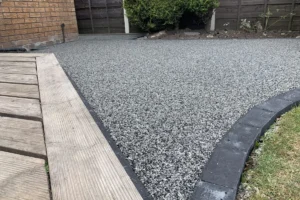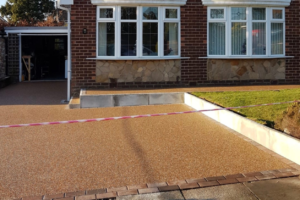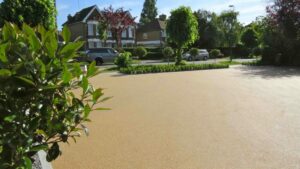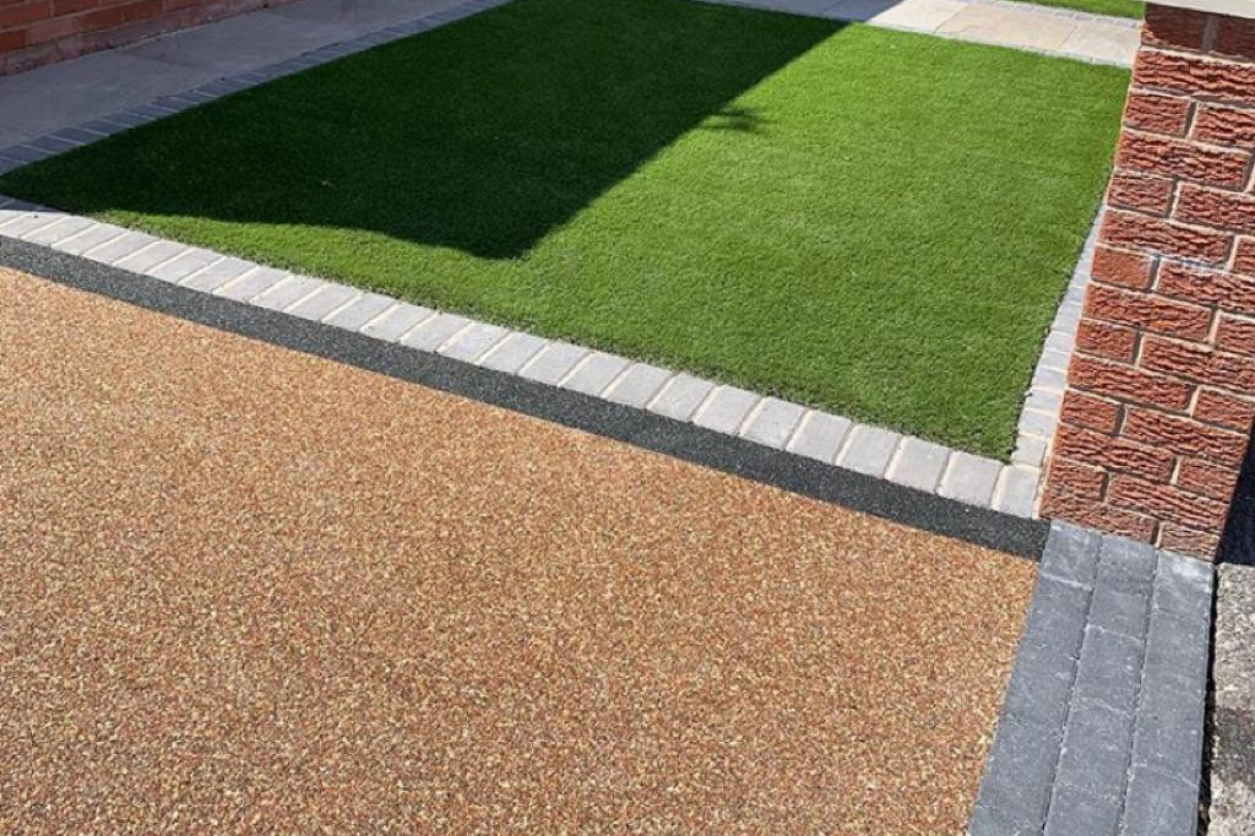
When installed correctly, resin driveways are beautiful, versatile, built for all seasons and provide a long-lasting surface that boosts the kerb appeal of your home.
This typically involves getting in touch with a professional installer who can see what your plans are for the driveway, give you some potential options and provide an instant impact to your home.
As resin-bound surfacing is a specialist process, we have a dedicated process for installation that we tailor to the needs of your driveway, but we also understand that in order to get the best results, you need to understand the material, what works, and what does not.
To that end, here are some of the most common issues that have been seen with resin driveways, what causes them and how they can be avoided and rectified.
Laying Resin On The Wrong Surface
A major advantage of resin surfacing is that it can be laid on a wide number of existing driveway surfaces, but there are some caveats that go alongside this.
One of these is that resin-bound paving is a sustainable drainage system (SuDS), but only if it is laid on a base that is porous enough to allow water to naturally drain into the ground.
As well as this, your existing surface needs to be prepared and cleaned in order for the resin adhesives to work, as well as be suitably sturdy and fixed.
Laying tarmac onto unclean, cracked, bumpy or damaged surfaces will lead to an uneven finish that will not last nearly as long as it should. If the other surface is damaged, weeds can grow through, which can affect the overall finish.
Not Compacting The Subbase Enough
A subbase is the most critical layer of your driveway, as it is the load bearer that distributes any weight placed upon it over a larger area. It is vital in order to ensure that footprints are not left in the resin or dips where the wheels of a parked car are placed.
If the subbase material is not suitably compacted, it can shift around, which can result in an uneven finish as well as a greater risk of wear and tear.
Insufficiently Thick Resin Layer
We use a 20mm thick resin-bound layer for our driveway, which gives a beautiful, durable finish that will last for years if well-maintained.
If the resin layer is not thick enough, it will not be able to take the weight of a car, and may be more susceptible to subsidence, uneven finishes and peeling.
Even if the resin-bound layer is not going to be used for an active driveway, it should be at least 15mm, and if you need it for commercial applications or high-traffic driveways and car parks, it may need to be even thicker than this.
Installing It In Bad Weather
Most adhesive products struggle to stick together in wet weather, and moisture ingress can cause blooming, where the surface has white imperfections on it.
Similarly, trying to install it in freezing temperatures can cause the resin to struggle to cure properly or affect its behaviour when set.